Learning Isn't Something Done To You
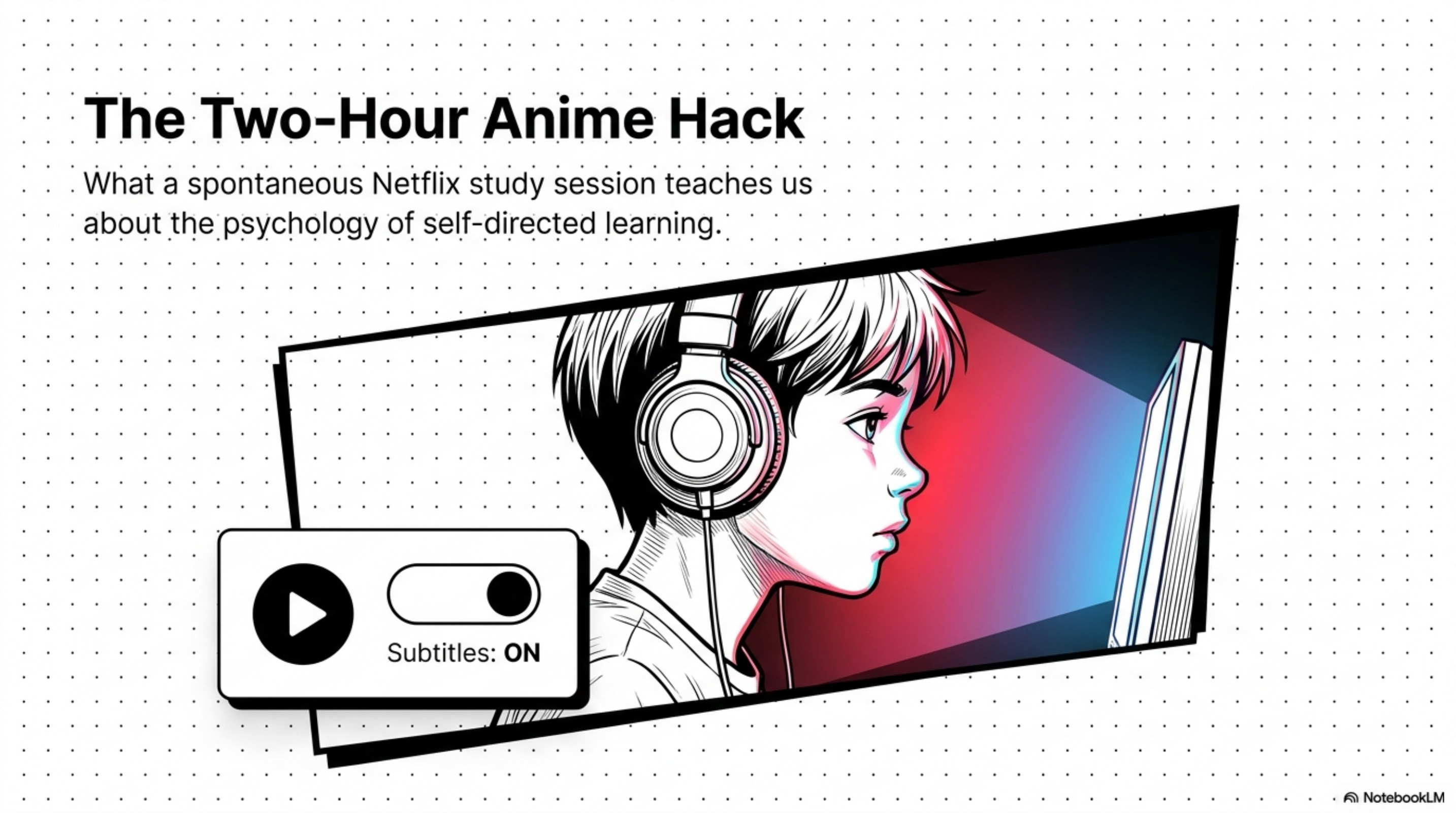
How My Child Invented Their Own Study Method Using Netflix

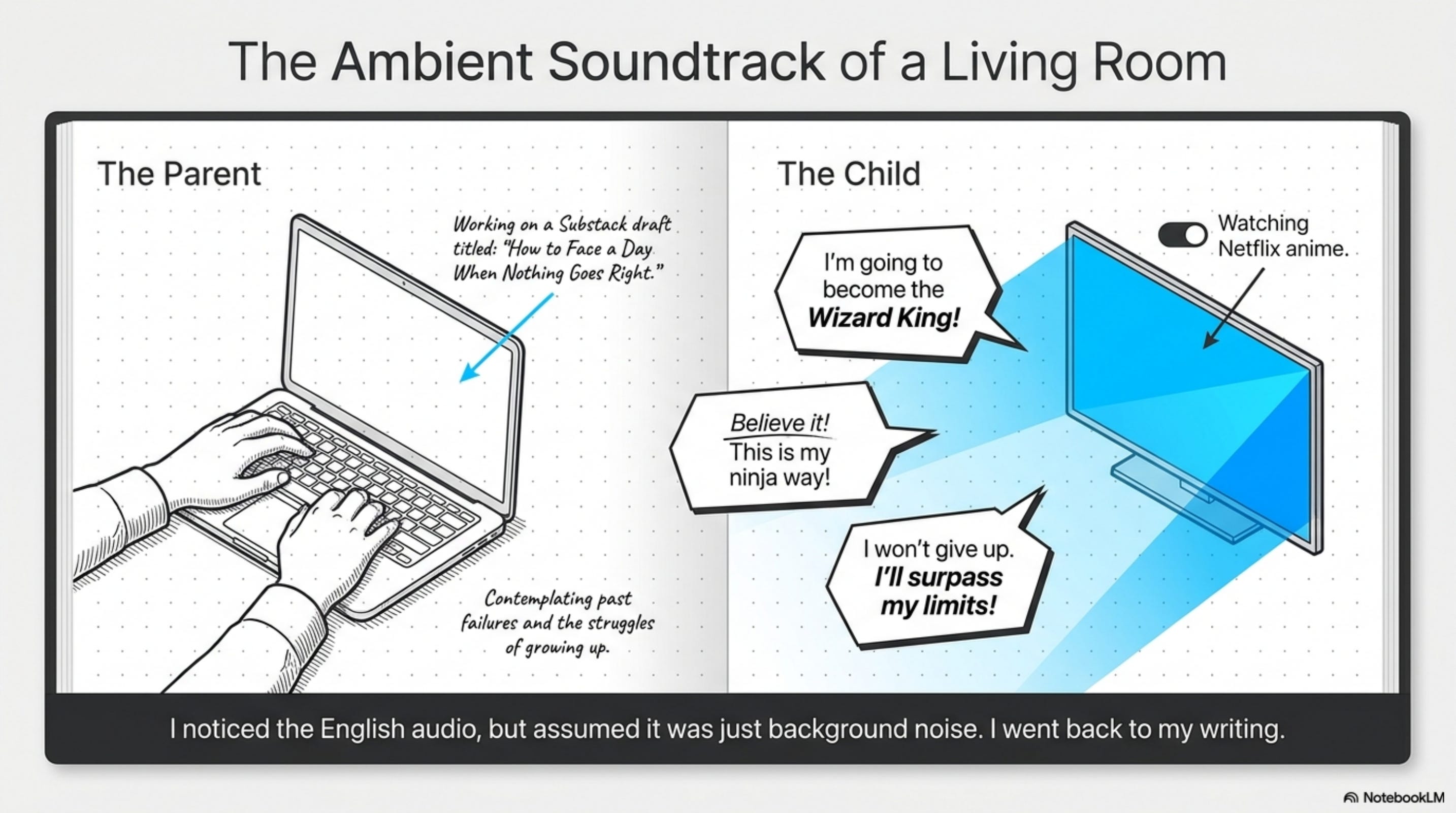
One evening, I was sitting on the couch with my laptop open, writing a Substack article.
The theme was “how to face days when nothing goes right.” I was weaving together my own failures and my child’s struggles, putting words out into the world.
That’s when I heard an unfamiliar sound coming from behind me.
English.
I turned around. My child was watching a Netflix anime on the TV — in English audio. Oh, they switched to English, I thought, assuming it was a passing whim. I turned back to my screen.
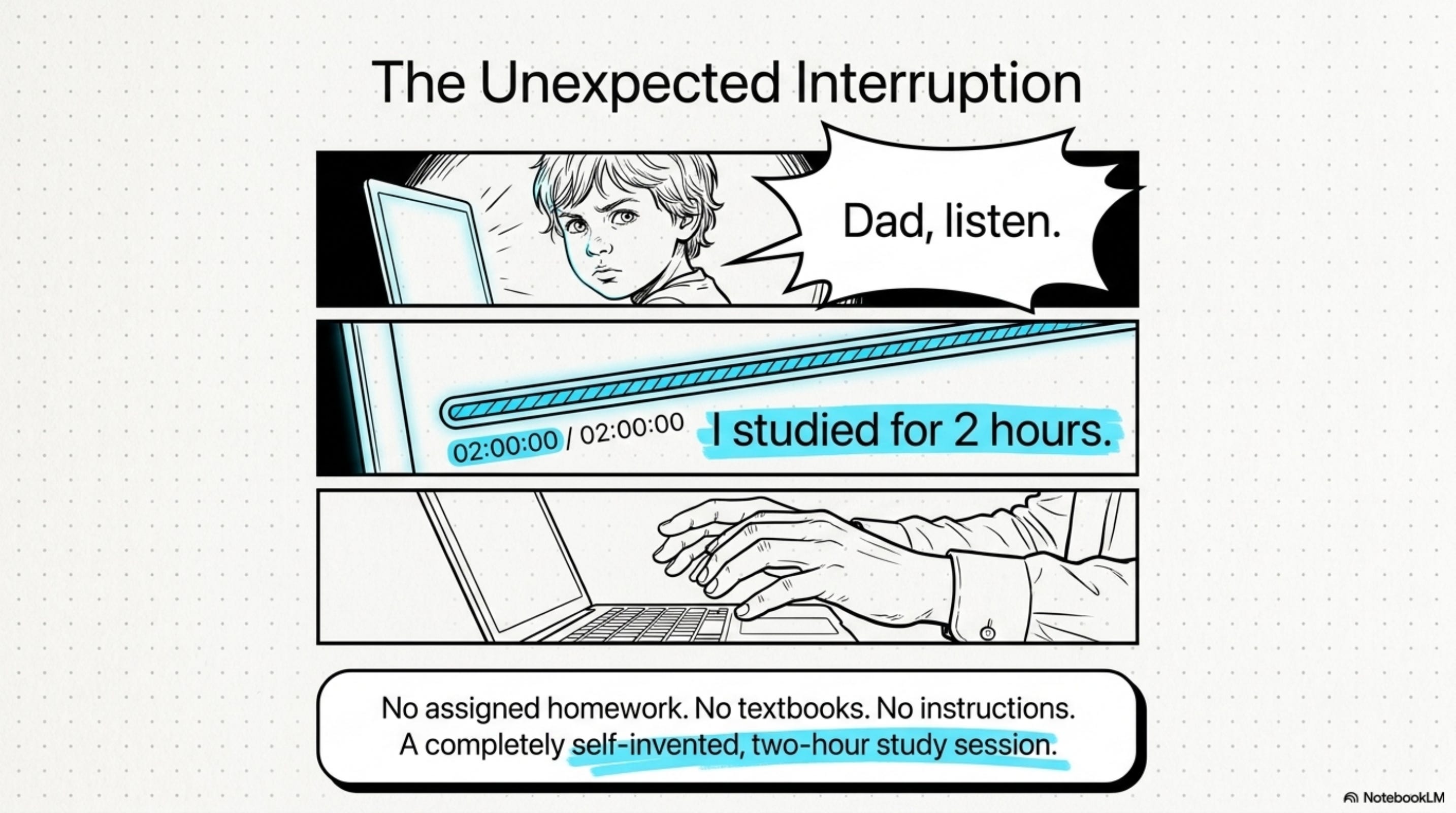
A little while later, my child came running over.
“Dad, listen. I accidentally studied for two whole hours.”
I stopped typing without thinking.
No one taught them to do this. So why?
No One Showed Them How
What surprised me wasn’t the “two hours.”
It was the method.
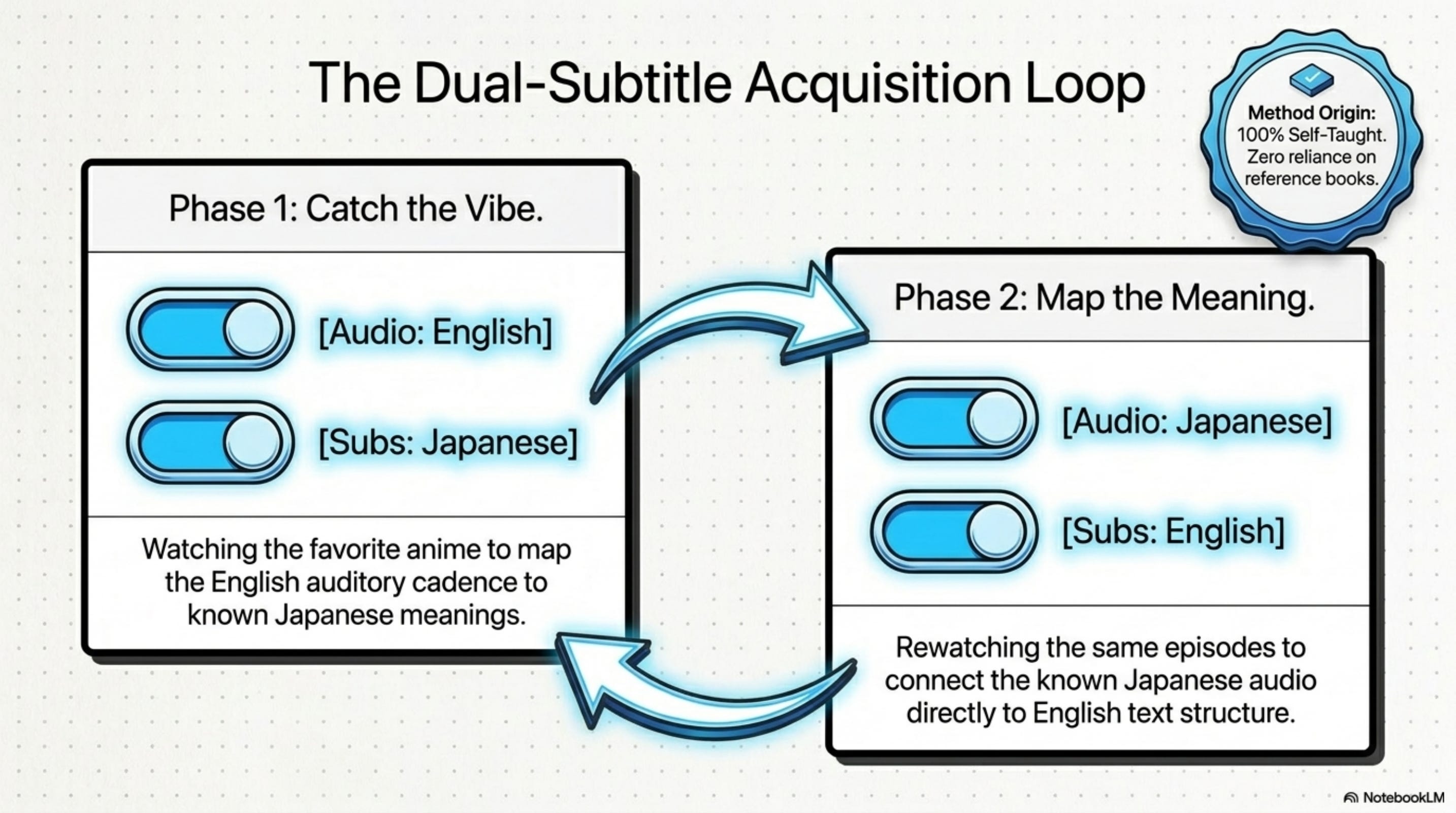
The learning system my child had invented on their own had two steps:
Step 1: Watch a favorite anime with English audio and Japanese subtitles.
Step 2: Watch the same content again with Japanese audio and English subtitles to confirm understanding.
No cram school. No textbook. No parental instruction. A method they invented themselves.
“How can I keep engaging with English while actually enjoying myself?” — my child had found the answer to that question entirely alone.
This is all I said:
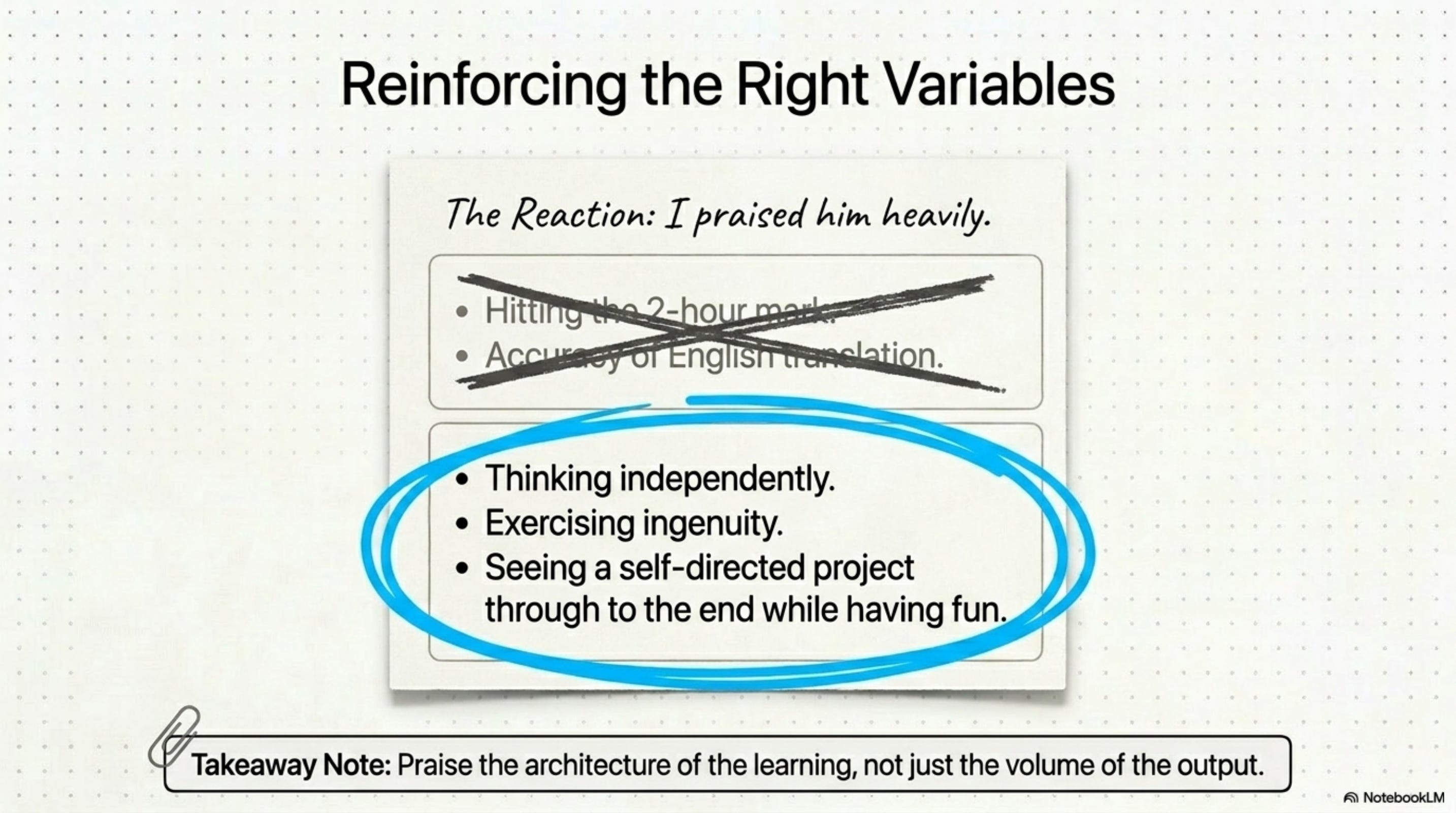
“What’s amazing isn’t that you studied for two hours. What’s amazing is that you thought it through yourself, got creative, and saw it through — all while having fun. That is what’s truly impressive.”
“Cool” Was the Most Powerful Learning Engine
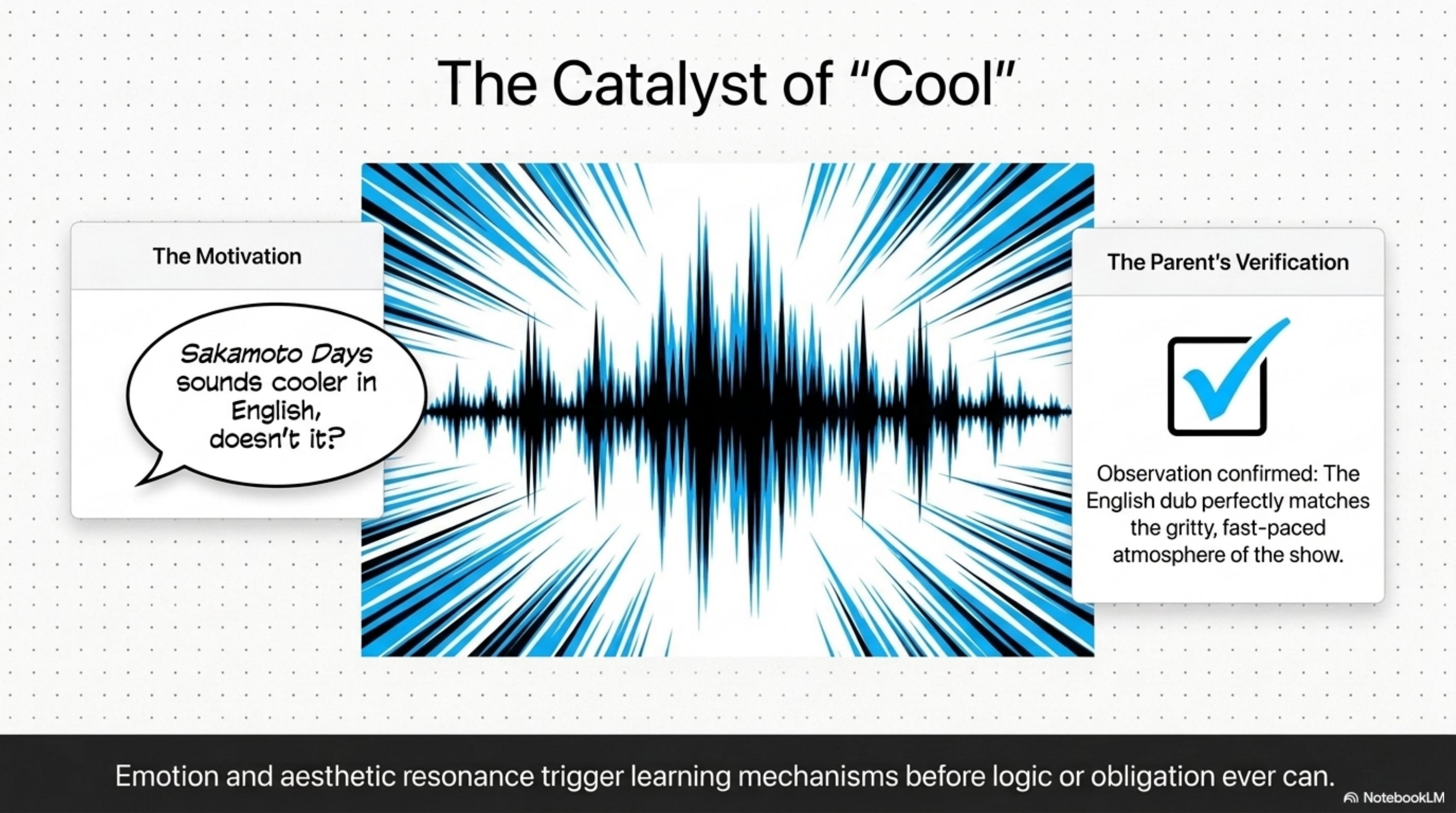
The trigger was simple.
My child was watching Sakamoto Days and suddenly noticed: “Doesn’t the English audio sound cooler?”
I watched a little alongside them. They were right. The tone of the English voice actors fit the show’s hard-boiled world perfectly.
That feeling of cool — that’s what sustained two hours of focused attention. Not obligation. Not pressure. Not a reward. Pure curiosity became the fuel for learning.
From a neuroscience perspective, this is a dopamine story. When people are absorbed in something they love, the brain’s learning efficiency reaches its peak. My child didn’t know the theory — but they were living it.
Netflix Was a Multilingual Platform All Along
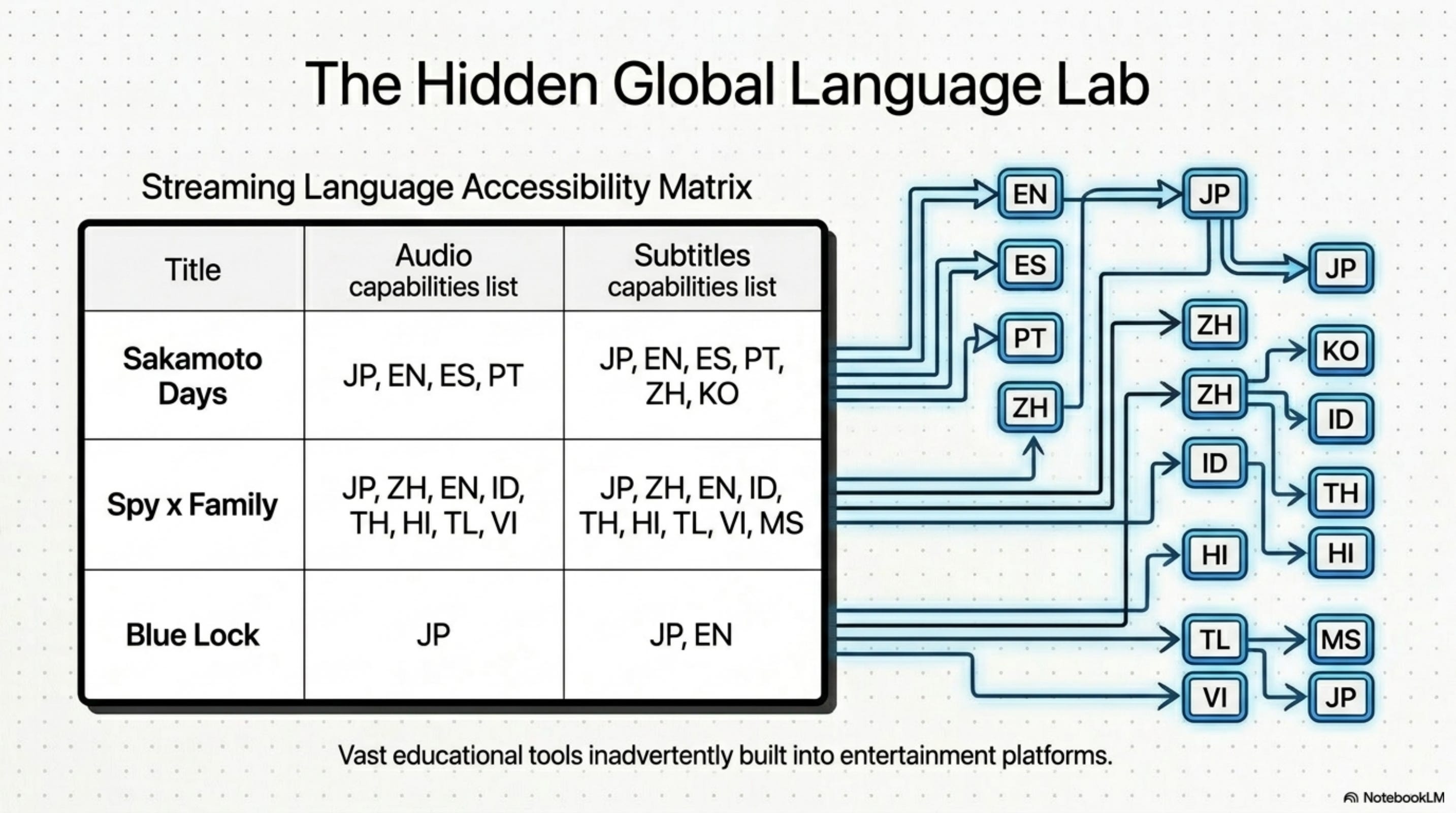
I did a little research afterward and was genuinely surprised by how many languages were available for the anime my child had been watching.
Sakamoto Days
Audio: Japanese, English, Spanish, Portuguese
Subtitles: Japanese, English, Spanish, Portuguese, Chinese, Korean
Spy x Family
Audio: Japanese, Chinese, English, Indonesian, Thai, Hindi, Filipino, Vietnamese
With one tap, you can access “learning materials” in eight languages from around the world. Anime had already become a global learning infrastructure — I just hadn’t noticed.
When I Was in Elementary School, Learning Felt Like Someone Else’s Business
I’ll be honest.
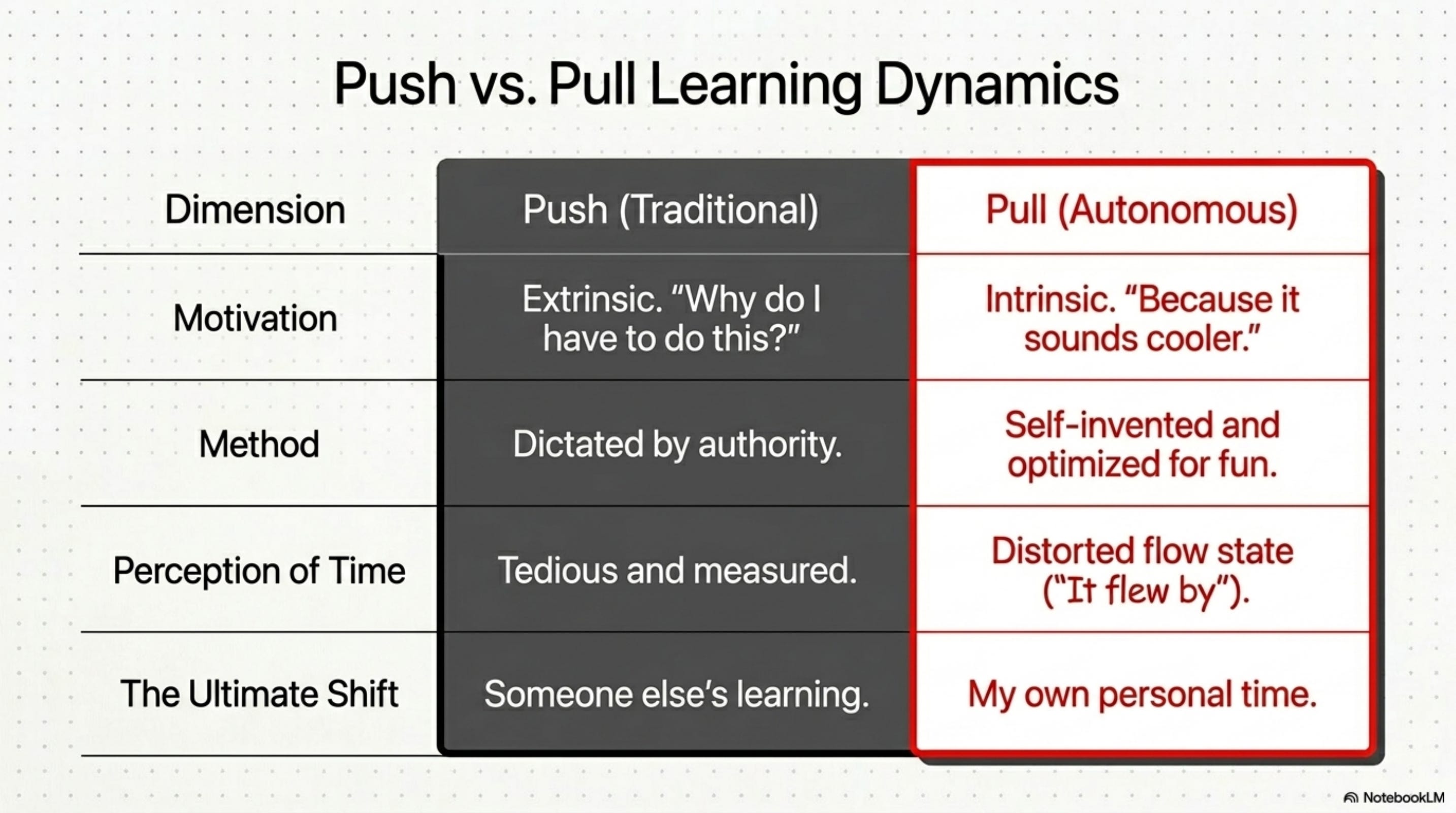
I was the type who did my homework dutifully as a kid. But inside, there was always a quiet voice asking: “Why do I have to do any of this?”
Learning was something given to me by others. It was never something I chose for myself.
That’s why, watching my child transform studying into something enjoyable — entirely on their own terms — made me happier than I can easily express.
I want to call this “ownership of learning.” The moment studying shifts from something done to you to something that is yours — that, I believe, is the real breakthrough in education.
This is what I told my child:
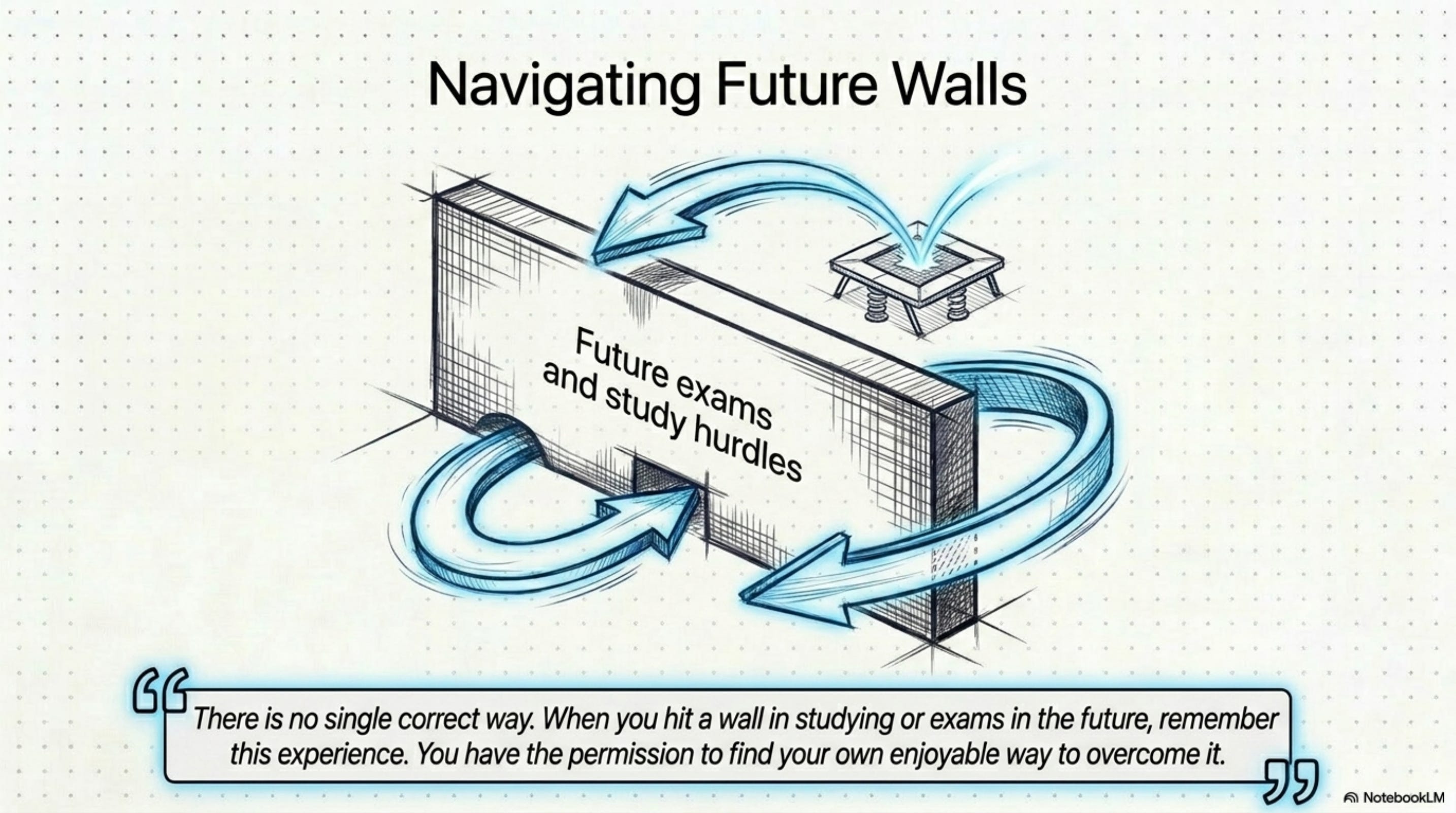
“From here on out, whether it’s studying or entrance exams, you will definitely hit walls. When that happens, I want you to remember this moment. There’s no single right way. You’re allowed to find the way that works for you.“
Don’t Miss the Small Shifts
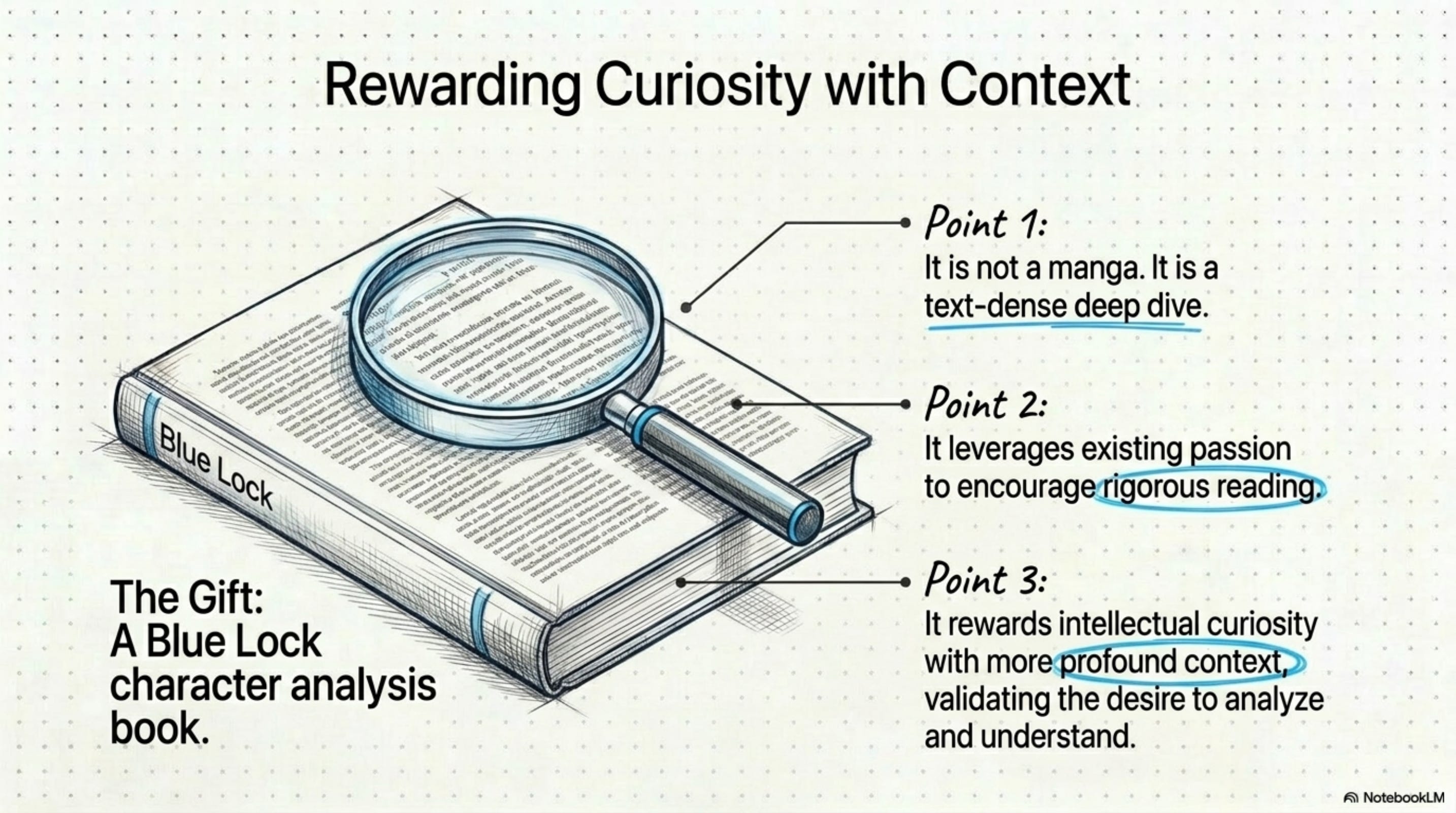
To celebrate that day, I gave my child a copy of an analytical book about Blue Lock — not the manga itself, but a text-based book that examines the characters’ decisions and motivations through logical analysis.
Choosing a written book rather than a comic was a small strategic move on my part. The goal: to keep the flame of interest alive while gently leading from the intuitive entry point of visuals and audio toward deeper, text-based comprehension.
A child’s growth doesn’t show up in test scores. It appears in the quiet, spontaneous acts of creativity that surface in everyday life.
What matters is noticing those small shifts — and finding them genuinely fascinating together.
The seeds of tomorrow’s breakthroughs are hiding in the ordinary moments of today.
What small change did you notice today?